
A practical guide to building a safety net that fits your life, protects your budget, and keeps your money working for you.
Key Takeaways
- Aim for three to six months of essential living expenses, though the right target depends on how stable your income is and how many people rely on you.
- If that feels out of reach, start smaller. A first goal of $500 or $1,000 is meaningful, and any cushion beats none.
- Keep your emergency fund somewhere safe, separate from everyday spending, and still earning interest. A dedicated savings account is the natural home.
- Automating your savings, even in small amounts, is the easiest way to build the habit and grow your fund over time.
Financial stress is on a lot of people’s minds right now, and for good reason. Financial experts recommend that every household keep an emergency fund covering three to six months of living expenses, yet many families find that goal hard to reach.
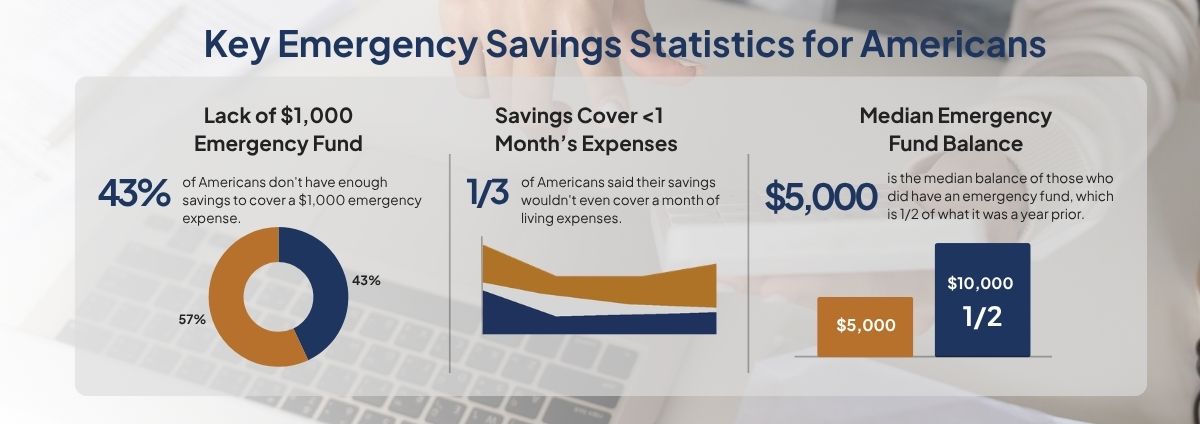
A survey conducted earlier this year by U.S. News & World Report found that 43% of Americans didn’t have enough savings to cover a $1,000 emergency expense. One-third said their savings wouldn’t cover even a single month of living expenses. Among those who did have an emergency fund, the median balance was $5,000, half of what respondents reported a year earlier, while the median amount people said they would like to have set aside was $10,000. The Federal Reserve has likewise found that only about 55% of American adults have three months’ worth of emergency savings.
Our customers ask us all the time how to save more, how large an emergency fund should be, and where to keep one. Let’s walk through why every household needs an emergency fund, how much to aim for, and the best places to keep it.
Why an Emergency Fund Matters More Than You Think
A financial emergency can arrive at any time: unexpected car repair, an illness and the medical bills that follow, a cut in your hours at work, or a broken phone that insurance won’t cover. Without a cushion to fall back on, many people turn to credit cards or loans, and the high interest rates that come with them can set you even further behind. What begins as a short-term fix can become long-term debt that weighs on your finances for years. Most people know a cushion would help yet setting that first bit of money aside is often the hardest part.
How Much Should You Save?
The standard guideline is an emergency fund that covers three to six months of your essential living expenses in case of a sudden loss of income. Start by looking at your monthly budget and separating what you truly need to spend from what you could cut back on.
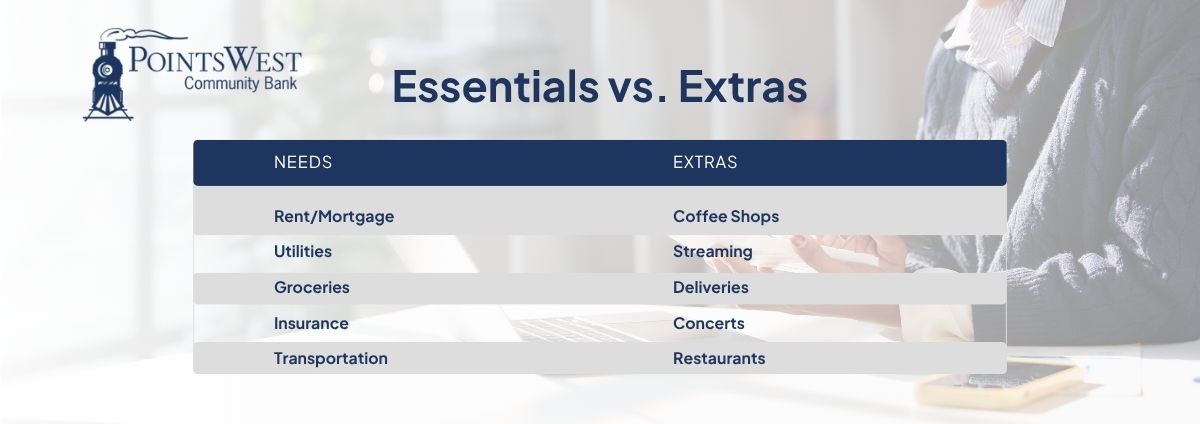
Essential living expenses include your rent or mortgage, utilities, basic groceries, insurance, and transportation. We aren’t talking about food deliveries or luxury purchases here. These are the costs you must cover to keep your household running, as opposed to lifestyle extras like coffee shops or streaming services.
If you don’t already keep a monthly budget, now is a great time to build one. Go through your bank accounts, checkbook, and credit card statements to get a clear picture of what you must spend to live and what you could trim if you had to. The Consumer Financial Protection Bureau’s guide to building an emergency fund is a helpful resource if you’d like a step-by-step walkthrough.
Three to six months is a general guide, and your own target may land higher or lower. If you’re self-employed, earn an income that rises and falls through the year, live in a single-income household, or have several family members depending on you, we suggest aiming for at least six months of expenses, and possibly more. If you’re a dual-income household with stable jobs and low debt, you might be comfortable starting at three months and raising your goal if your circumstances change.
If you notice a wide gap between what you can save and what your household spends, try not to let it discourage you. Looking closely at your budget is not only about pinpointing your target, it’s also about finding room to save and expenses you can reduce. You might set an initial goal of $500 or $1,000 as a meaningful first step. Whatever you manage to put away leaves you better prepared to weather a setback.
Where Should You Keep It?
Once you know roughly how much you’re working toward, the next question is where to keep it. A cookie jar or a spot under the mattress might feel convenient, but cash at home is vulnerable to theft or loss, and it can be a little too tempting to dip into for a late-night food delivery or another nonessential.
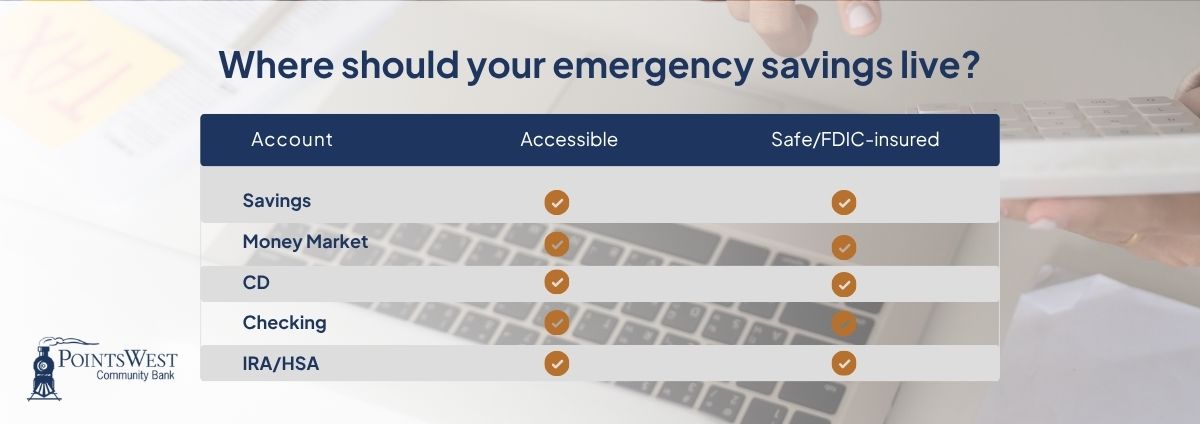
The best home for an emergency fund is somewhere safe, separate from your everyday spending, accessible when you need it, and still earning interest. For most people, that means a dedicated savings account. It checks every box, and deposits are insured by the Federal Deposit Insurance Corporation (FDIC) up to $250,000 per depositor, per ownership category, in the unlikely event of a bank failure.
Most people rely on a checking account for depositing income, paying bills, and covering day-to-day essentials. Keeping your emergency fund in that same account can make it far too easy to spend. Many of our customers instead set up automatic transfers from checking into savings, or split their paycheck between the two accounts. Automating your savings this way makes building a fund almost effortless and serves as a steady reminder to keep at it.
A certificate of deposit (CD) is another option, offering a higher interest rate in exchange for locking in your funds for a set number of months. The trade-off is access: money in a CD stays put until the term ends, and withdrawing early comes with a penalty. That’s why we don’t recommend keeping all of your emergency fund in CDs. Some customers split their emergency savings between a savings account and CDs of varying term lengths. If you take that route, make sure the balance in your savings account would be enough to carry you through an emergency until the next CD matures.
Depending on the size of your fund, a money market account may also be worth considering. These accounts appeal to savers who want a higher interest rate while keeping the flexibility to withdraw when needed. They often use tiered rates, so the more you keep in the account, the higher the rate you may earn.
Some customers ask about investment accounts such as an individual retirement account (IRA) or a health savings account (HSA). IRAs are excellent for retirement, but they aren’t a good place for an emergency fund, since you generally can’t reach the money until you retire. HSAs, available to those with high-deductible health plans, let you set aside pretax dollars for medical costs, but they lack the flexibility an emergency fund calls for.
Tips to Build Your Fund Without Feeling the Pinch
Once you’ve settled on a target and a place to keep it, the goal is to build the habit. It helps to treat your emergency fund like any other regular expense, something you contribute to on a set schedule rather than whatever happens to be left over.
Automatic transfers do a lot of the work for you. You might schedule them for every payday, once a week, or once a month, whatever fits your budget. Start small and build gradually: even $25 a week adds up to about $1,300 over a year, and you can raise the amount as your budget allows. Every dollar saved is a little more cushion the next time life throws a surprise your way. When a windfall comes along, such as a tax refund, a work bonus, or birthday money, try to direct all or most of it into your fund. It’s also worth revisiting your target once a year, or whenever your income or expenses shift.
Points West Is Here When You’re Ready to Start
When you’re ready, opening a savings or money market account with Points West Community Bank is simple, whether you get started online or with a local banker who knows your community. We’ve been helping families across Colorado, Nebraska, and Wyoming build financial security since 1906. If you have questions about how much to save or where to keep your emergency fund, reach out at your nearest branch. We’re always glad to help you find the right fit and get your safety net started.